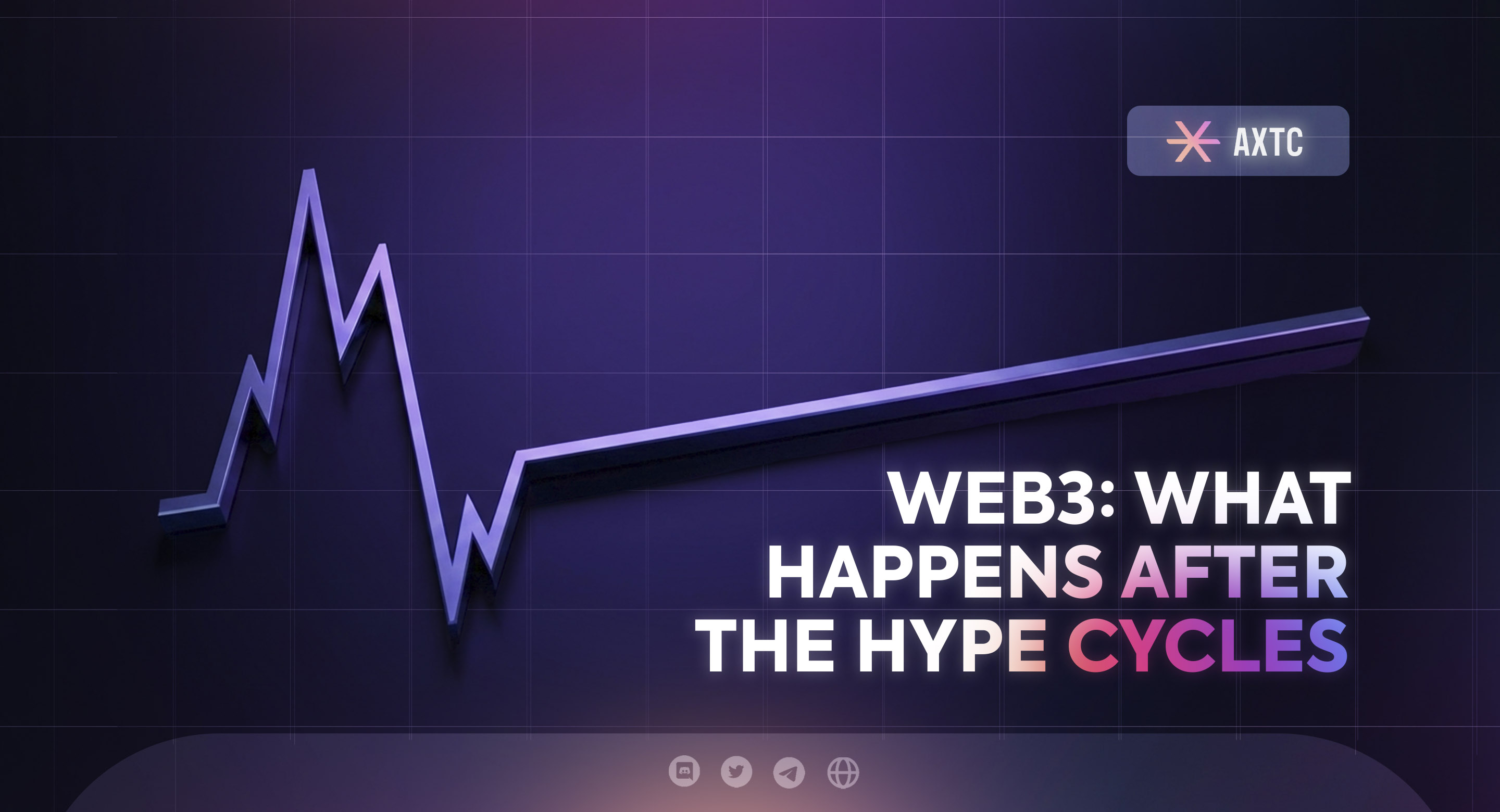

Web3 has never moved in a straight line.
Its history is marked by sharp rises in attention, rapid inflows of capital, and equally sharp corrections. Each cycle brings bold promises, fast experimentation, and, inevitably, disappointment for those who expect overnight transformation.
But beneath the volatility, something quieter continues: infrastructure is built, ideas mature, and lessons accumulate.
Understanding the long game of Web3 means looking beyond hype cycles — and focusing on what endures.
Why Hype Cycles Are Inevitable
Hype cycles are not unique to Web3. Every transformative technology experiences them.
In Web3, hype often forms around:
- New protocols or narratives
- Rapid price appreciation
- Promises of decentralization at scale
These moments attract attention and talent — but they also distort priorities. Short-term incentives overshadow long-term design. Metrics replace meaning.
When hype fades, only systems with real utility remain.
Bear Markets as Filters, Not Failures
Bear markets are often framed as setbacks. In reality, they function as filters.
When speculation slows:
- Unsustainable projects fade
- Noise decreases
- Builders with long-term conviction remain
These periods force teams to answer hard questions:
- What problem are we actually solving?
- Who is this for?
- Why should it exist beyond price cycles?
Some of the most durable Web3 infrastructure has been built during periods of low attention — precisely because focus returns to fundamentals.
What Actually Progresses During the Quiet Phases
While public interest may decline, important work continues.
During quieter cycles, Web3 often sees:
- Improvements in scalability and performance
- Better tooling for developers
- More thoughtful governance models
- Incremental UX improvements
These changes rarely generate headlines, but they make future adoption possible.
The long game is built in layers, not moments.
Shifting from Speculation to Utility
One of the most significant transitions in Web3 is the gradual shift from speculation to usefulness.
Speculation accelerates discovery, but it cannot sustain ecosystems on its own. Over time, value accrues to systems that:
- Solve real coordination problems
- Reduce friction in existing workflows
- Enable new forms of participation or ownership
As hype recedes, utility becomes the primary signal.
Communities That Survive Cycles
Projects come and go. Communities determine what lasts.
Communities that survive hype cycles tend to share certain traits:
- Clear purpose beyond financial incentives
- Strong norms and shared values
- Space for contribution that isn’t purely speculative
These communities are not immune to cycles — but they are resilient to them.
They treat market conditions as context, not identity.
The Role of Patience in Web3
Patience is an undervalued asset in fast-moving ecosystems.
Building for the long term requires:
- Accepting slower growth
- Resisting trend-chasing
- Making decisions that will still make sense years later
The most important Web3 systems may not look revolutionary at first. They often appear gradual, even unremarkable — until their foundations become indispensable.
Beyond the Next Cycle
The question is not whether another hype cycle will arrive — it will.
The real question is what will still be standing when it passes.
Web3’s long-term relevance will be defined by:
- Whether it improves coordination and trust
- Whether it meaningfully expands user agency
- Whether it builds systems that people choose to rely on
These outcomes are shaped over time, not in bull markets.
Closing Reflection
Web3 is not a moment.
It is a process.
Hype cycles come and go, but infrastructure, norms, and communities compound slowly. The long game belongs to those willing to build when attention is low and expectations are realistic.
What happens after the hype cycles is not the end of Web3 —
it is where its real work begins.